
Tear-Away Stabilizer
A temporary backing designed to be easily removed after stitching. Ideal for woven fabrics that do not stretch.
As an Amazon Associate and affiliate partner, we may earn a small commission from qualifying purchases at no extra cost to you.
The Ultimate Guide to Tear-Away Stabilizers for Machine Embroidery
Whether you are just getting started with machine embroidery or you have been digitizing for years, choosing the right tear-away stabilizer can be the difference between a crisp, professional finish and a puckered, distorted mess. This guide covers everything you need to know about tear-away embroidery stabilizers, from the four main types and their best uses, to the top brands available at retailers like Joann, Hobby Lobby, Walmart, and Michaels.
What Is a Tear-Away Stabilizer?
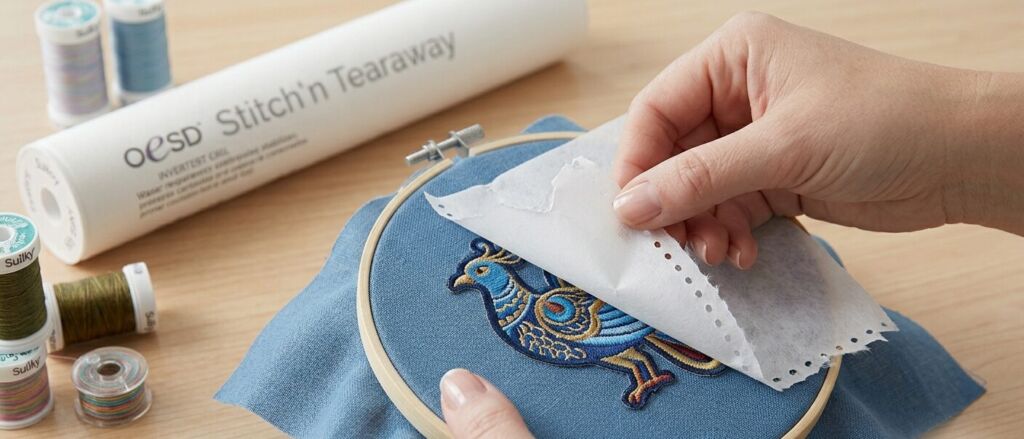
A tear-away stabilizer (also spelled “tear-away stabiliser” in British English) is a woven or non-woven backing material placed beneath your fabric during machine embroidery. It gives the needle and thread a stable foundation to stitch into, preventing the fabric from shifting or puckering. Once the embroidery is complete, the stabilizer is torn away from the edges of the design, leaving a clean result on the finished piece.
Tear-away stabilizers are best suited for stable, woven fabrics such as denim, canvas, cotton twill, linen, and most structured garments. They are not recommended for knit or stretchy fabrics, where a cut-away stabilizer is the better choice.
Tear-Away vs Cut-Away Stabilizer: What Is the Difference?
Tear-Away: Removed by tearing away the excess backing after stitching. Best for stable woven fabrics such as cotton, denim, and canvas. The stabilizer does not remain in the finished garment.
Cut-Away: Trimmed close to the design with scissors after stitching, and the remaining backing stays permanently inside the garment. Best for stretchy or knit fabrics such as t-shirts, fleece, and polo shirts, where the permanent support prevents the design from distorting over time and after repeated washing.
A helpful rule: if the fabric stretches, use cut-away. If the fabric is stable and woven, tear-away is your go-to choice. Read our full cut-away stabilizer guide to learn more.
Wash-Away vs Tear-Away Stabilizer: What Is the Difference?
Tear-Away: Physically torn away from around the design after embroidery. Any small bits that remain under dense stitching stay in the finished piece permanently, but this is not an issue on opaque fabrics.
Wash-Away (Water-Soluble): Completely dissolves in water after stitching. This makes it ideal for freestanding lace, applique positioning, stitching on sheer or open-weave fabrics, and situations where no backing residue can remain. Some products, like the Floriani Stitch N Wash fusible water-soluble tearaway, bridge both categories by combining wash-away properties with a tear-away format for added convenience. See our dedicated wash-away stabilizer guide for a full breakdown.
The 4 Types of Tear-Away Stabilizers
Not all tear-away stabilizers are the same. The four main types each serve a specific purpose, and using the right one for your project will save you time and protect your stitching.
1. Standard / Crisp Tear-Away
This is the most widely used type and the best starting point for most machine embroidery projects on woven fabrics. Standard tear-away has a crisp, firm feel that tears cleanly along stitch lines without fraying or leaving ragged edges. It is available in lightweight, medium-weight, and heavyweight versions to match the density of your design.
- Lightweight tear-away stabilizer: Best for small, simple designs with low stitch counts on light fabrics such as handkerchiefs or organza.
- Medium-weight tear-away stabilizer: The everyday workhorse. Covers the majority of embroidery projects on cotton, denim, and twill.
- Heavyweight tear-away stabilizer: For dense fills, large designs, or heavily structured fabrics that need extra support.
Top brands in this category include Pellon Stitch N Tear (also sold as Pellon 806 and the Pellon 360 EZ Stitch tear-away), Vilene tear-away, Floriani tearaway medium stabilizer, Madeira Cotton Soft tear-away, Sulky tear-away stabilizer, OESD tear-away embroidery stabilizer, Inspira tear-away stabilizer, Threadart stabilizer, and New Brothread embroidery stabilizer. You can find many of these as pre-cut stabilizer sheets or on rolls at Joann, Hobby Lobby, Walmart, Michaels, and online.
2. Sticky / Self-Adhesive Tear-Away
A sticky tear-away stabilizer (also called a self-adhesive, adhesive, or sticky-back tear-away) has a peel-and-stick surface that holds fabric in place during stitching without hooping. You hoop the stabilizer alone, score and peel back the paper release layer, and then press your fabric or item onto the exposed adhesive surface.
This type is essential for embroidering items that are difficult or impossible to hoop directly, including caps, towels, finished edges, small accessories, and delicate fabrics that would be damaged by hoop marks. It also works beautifully as an embroidery sticky stabilizer for holding applique pieces in position before stitching. For a deeper look at all adhesive backing options, visit our adhesive sticky-back stabilizer guide.
Leading brands include OESD Stabil Stick tearaway, Sulky Sticky Self-Adhesive Tear-Away Stabilizer (available on rolls), Floriani Perfect Stick tearaway, Pellon Stick N Tear stabilizer, and World Weidner tear-away adhesive options.
3. Fusible / Iron-On Tear-Away
A fusible tear-away stabilizer bonds to the back of your fabric with heat from an iron before you even place it in the hoop. This is particularly useful for slippery or hard-to-handle fabrics, for tear-away stabilizer for hand embroidery projects, and for applique work where you want the stabilizer to stay put without adhesive spray or pins.
Because the stabilizer is ironed onto the fabric rather than simply placed beneath it, it provides exceptional stability for the duration of the stitch-out. After stitching, it tears away just like standard tear-away backing.
Key brands include Sulky Totally Stable iron-on tear-away stabilizer and Floriani Heat N Sta, which is a popular fusible option used by digitizers for precise applique placement and specialty projects.
4. Specialty: Black Tear-Away Stabilizer
Standard white or light-colored tear-away can peek through dark-colored fabrics or show at the edges of a design stitched on black, navy, or charcoal fabric. A black tear-away stabilizer solves this problem entirely. It behaves exactly like standard tear-away but eliminates any light-colored backing showing through on dark garments.
This is a must-have for embroiderers who regularly work on dark fabrics. Look for the black tear-away embroidery stabilizer options from OESD and other specialty suppliers.
Tear-Away Stabilizer Comparison Table
Use this table as a quick reference when selecting the right type of tear-away for your next project.
| Stabilizer Type | Best Fabric / Use | Popular Brands |
|---|---|---|
| Standard / Crisp Tear-Away | Woven fabrics: cotton, denim, canvas, twill, linen | Pellon 806 / Stitch N Tear, Vilene, Floriani, Madeira Cotton Soft, Sulky, OESD, Inspira, Threadart |
| Sticky / Self-Adhesive Tear-Away | Hard-to-hoop items, caps, towels, applique, delicate fabrics | OESD Stabil Stick, Sulky Sticky, Floriani Perfect Stick, Pellon Stick N Tear, World Weidner |
| Fusible / Iron-On Tear-Away | Slippery fabrics, applique, hand embroidery, precise placement | Sulky Totally Stable, Floriani Heat N Sta, Floriani Template Tearaway |
| Specialty Black Tear-Away | Dark fabrics: black, navy, charcoal, deep jewel tones | OESD Black Tear-Away, specialty embroidery suppliers |
Where to Buy Tear-Away Stabilizer
Tear-away stabilizers are widely available both in stores and online. Here is a quick breakdown by retailer:
- Tear-away stabilizer at Joann: Joann carries Pellon Stitch N Tear, Pellon 806, and their own store-brand stabilizer options, available by the yard or in pre-cut sheets.
- Tear-away stabilizer at Hobby Lobby: Hobby Lobby stocks a solid selection of lightweight, medium, and heavyweight tear-away, often at a discount with their weekly coupon.
- Tear-away stabilizer at Walmart: Walmart carries a more limited selection in-store but offers a wider range of brands through Walmart.com, including Pellon and some Sulky products.
- Tear-away stabilizer at Michaels: Michaels carries embroidery stabilizer options near their sewing and fabric section, though selection varies by location.
- Online: For the widest selection of specialty brands like OESD, Floriani, Sulky, Madeira, and World Weidner, ordering online through embroidery-specific retailers gives you access to the full product lines, including bulk rolls and specialty weights.
Tear-Away Stabilizer for Specific Applications
Tear-Away Stabilizer for Applique
For applique projects, a medium-weight tear-away or a sticky tear-away works well. The adhesive versions are especially helpful because they hold your applique fabric in place while you stitch the placement and tack-down lines, eliminating the need for pins or temporary adhesive spray.
Tear-Away Stabilizer for Sewing (Non-Embroidery)
Tear-away stabilizer is not just for machine embroidery. As a tear-away stabilizer for sewing, it is commonly used as a tear-away sewing paper or tear-away paper for sewing to stabilize seams in knit fabrics, trace patterns, and support machine buttonholes. After stitching, the stabilizer tears away cleanly, leaving the seam or buttonhole perfectly formed.
Perforated Tear-Away Stabilizer
Some brands offer a perforated tear-away stabilizer with micro-perforations throughout the sheet. These perforations create built-in tear lines that make removal easier and reduce the risk of distorting stitches during tearaway, which is a real advantage on dense or detailed designs.
Pairing Tear-Away With a Topping or No-Show Mesh
Tear-away stabilizer handles the backing, but some fabrics and designs benefit from additional layers on top of or beneath the embroidery as well. Two common additions worth knowing about:
- Stabilizer topping: A water-soluble film placed on top of the fabric before stitching. It keeps stitches from sinking into textured surfaces like towels, fleece, and pique knits, giving fills and satin stitches a clean, raised appearance. After stitching, the topping tears or washes away. Learn more in our stabilizer topping guide.
- No-show mesh cut-away: A lightweight, breathable mesh used as a cut-away backing on delicate or lightweight knit garments where a standard cut-away would feel too stiff or heavy. While this is a cut-away product rather than tear-away, it is frequently used alongside tear-away on multi-layer or combination projects. See our full no-show mesh guide for details.
Common Mistakes
One of the most common mistakes embroiderers make with tear-away stabilizer is pulling it away too aggressively after stitching. Yanking the backing at a sharp angle instead of bending it back on itself puts lateral stress directly on the stitches, which can distort satin columns, pucker fill areas, and even break thread. Another frequent error is using tear-away on stretchy or knit fabrics, such as t-shirts, jersey, or fleece. Because tear-away does not remain permanently in the garment, the design loses its support after washing and wearing, causing it to pucker and pull over time. A cut-away stabilizer is always the correct choice for any fabric with stretch. Finally, many beginners underestimate the weight of stabilizer needed for a dense or large design, going with a lightweight sheet when a medium or heavyweight tear-away would give the design the solid foundation it needs to stitch out cleanly.
Frequently Asked Questions
What is the difference between tear-away and cut-away embroidery stabilizer?
Can I use tear-away stabilizer on t-shirts?
What weight of tear-away stabilizer should I use?
Where can I buy tear-away stabilizer near me?
What are the best brands of tear-away stabilizer?
As an Amazon Associate and affiliate partner, we may earn a small commission from qualifying purchases at no extra cost to you.
Digitizer's Insight
Even the right stabilizer cannot fix a poorly digitized file. If you're still experiencing puckering, gaps, or registration issues after using the correct backing, the root cause is almost certainly your DST/EMB file — not your setup. Our team at EZ Stitch Digitizing specialises in precision pull-compensation and density correction.
Get Professional Digitizing →