
No-Show Mesh Stabilizer
A ultra-soft, breathable cut-away made from lightweight nylon mesh. Virtually invisible under light-colored garments and completely gentle against skin.
As an Amazon Associate and affiliate partner, we may earn a small commission from qualifying purchases at no extra cost to you.
Picture this: you’ve just finished stitching a clean logo on a light blue polo shirt. The thread colors look great and the tension is perfect, so you flip the shirt over to admire the back, and there it is. A stiff white rectangle of stabilizer sitting right behind your design, visible through the fabric like a shadow. Hold the shirt up to the light, or imagine someone wearing it on a sunny day, and that patch becomes even more obvious.
This is one of the most common frustrations in machine embroidery, and it almost always comes down to one thing: using the wrong backing on light or sheer fabric. Standard cut-away stabilizer is opaque, usually bright white or stark black, and it was never meant to disappear. No-Show Mesh stabilizer (also called Polymesh, Soft and Sheer Cut-Away, or no-show embroidery backing, and sometimes spelled “stabiliser” in the UK and Australia) solves this problem at the source. It is still a cut-away, so it stays in the garment permanently to support your stitches, but it is woven in an open, sheer pattern that lets fabric color and light pass through it. Once it is behind the design, it essentially disappears.
Below, we will cover the different types of no-show mesh, when each one makes sense, how it compares to regular cut-away, and the right way to trim it so it stays soft and invisible after repeated washes.
When Should You Use No-Show Mesh Instead of Regular Cut-Away?
Reach for no-show mesh any time the back of the garment is visible, thin, or in direct contact with skin. The most common situations include:
- Light-colored polo shirts and uniform shirts
- Dress shirts and other light woven fabrics
- Baby onesies and infant bodysuits
- Children’s clothing where comfort against the skin matters
- Light linen, voile, or other sheer wovens
- Any garment where the wrong side of the fabric is on display or touching skin
If none of these apply, for example you are working on a heavyweight canvas tote or a dark denim jacket where the back will never be seen, regular cut-away stabilizer is usually the more economical choice.
The 3 Types of No-Show Mesh Stabilizer
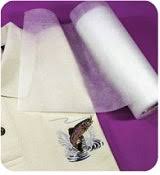
No-show mesh is not a single product, it is a small category that includes a few different weights and colors, each suited to different fabrics and projects. Here is a breakdown of the three main types you are likely to come across.
1. Standard No-Show Polymesh (White or Nude)
This is the workhorse of the no-show family and the one most digitizers reach for first. Standard polymesh stabilizer typically weighs between 1.8 and 2.0 oz, light enough to stay soft and sheer but substantial enough to support most everyday designs without puckering. Because it comes in white and nude or tan shades, it blends seamlessly behind light-colored fabrics.
Popular options in this category include OESD Polymesh, New brothread No-Show Mesh, and World Weidner Polymesh. All three are widely used cut-away mesh stabilizers and are largely interchangeable for everyday projects like polo shirts, t-shirts, and lighter-fabric tote bags.
2. Soft and Sheer Cut-Away (Ultra-Soft)
For projects where comfort against the skin is the top priority, an even softer version of no-show mesh exists, commonly sold as Soft and Sheer Cut-Away or simply soft and sheer stabilizer. It is built specifically for baby clothes, infant onesies, and other garments worn close to delicate skin. The most recognized name in this category is Sulky Soft n Sheer, which has become something of an industry standard for embroiderers who specialize in baby and children’s items. It carries the same see-through, blend-in quality as standard polymesh, but in a lighter, gentler hand that will not feel stiff once it is trimmed and sewn into the garment.
3. Black No-Show Mesh
Standard polymesh is made in white and nude for a reason: those shades blend with the light fabrics most embroiderers work with. But on navy, black, or other dark garments, even a nude mesh can create a subtle outline around the design, especially when the shirt is held up to light. Black no-show mesh solves this by using the same open, sheer weave as standard polymesh, just dyed dark instead of light. New brothread Black No-Show Mesh is a widely used example, and it is worth keeping a roll on hand any time you are working on dark polos, jackets, or hoodies where the back of the design will be visible or felt against the skin.
| Mesh Type | Best Used For | Key Feature | Popular Brands |
|---|---|---|---|
| Standard No-Show Polymesh | Polo shirts, dress shirts, light t-shirts | Sheer, 1.8 to 2.0 oz, white and nude | OESD Polymesh, New brothread, World Weidner |
| Soft and Sheer Cut-Away | Baby clothes, sensitive skin garments | Extra-soft, ultra lightweight | Sulky Soft n Sheer |
| Black No-Show Mesh | Navy, black, and dark-colored garments | Dark-toned mesh that stays hidden | New brothread Black No-Show Mesh |
No-Show Mesh vs Regular Cut-Away Stabilizer
What is the difference between No-Show Mesh and regular Cut-Away stabilizer?
Regular cut-away stabilizer is a tightly woven, opaque fabric, usually solid white or black, that is trimmed close to the design after stitching but remains permanently behind it. It is strong and reliable, which is why it is the standard choice for jackets, bags, and heavyweight fabrics where the inside of the garment is never on display. No-show mesh is also a cut-away in the sense that it stays in the garment for good, but it is woven in an open, almost lace-like pattern. That open weave lets light and fabric color show through it, so instead of a solid patch, you get a faint, barely visible shadow behind the stitches. If you are working with stretchy knits, or on a project where you eventually want the backing removed entirely rather than left in place, a tear-away stabilizer may be a better fit than either cut-away option.
How to Cut No-Show Mesh Properly
Pro Tip: Trim no-show mesh close to the stitching, but always leave a small border, about 1/4 inch, around the design. Cutting flush with the stitches removes the buffer that holds the stitching in place, which can cause the edges to curl or fray after a few washes. Once trimmed, take a moment to round off the corners of the stabilizer with your scissors instead of leaving sharp points. This small step prevents any stiff edges or corners from poking through and irritating skin, which matters most on baby clothes and other garments worn close to the body.
Related Stabilizer Guides
No-show mesh solves the show-through problem, but it is not the only stabilizer you will need in your toolkit. A few related guides cover other common situations:
- Stabilizer Topping: if you are stitching on fleece, terry cloth, or any fabric with a nap, pair your no-show mesh with a topping on top of the fabric so stitches sit cleanly on the surface instead of sinking into the pile.
- Adhesive Sticky Back Stabilizer: for hard-to-hoop spots like collars, cuffs, sleeves, and caps, a sticky-back stabilizer holds the garment steady so you can position it without stretching or marking the fabric.
- Wash Away Stabilizer: for freestanding lace, appliqué, or any project where you want the stabilizer to dissolve completely after stitching, a wash-away topping or backing is the right tool.
Common Mistakes
One of the most common mistakes is using regular opaque white cut-away stabilizer on a light-colored shirt, which is exactly what creates that visible rectangle behind the design in the first place. Another mistake is using no-show mesh on heavy, dense designs such as large appliques or thick fills, where its lightweight construction cannot provide enough support and the stitches end up puckering or shifting. Trimming the mesh too close to the stitching is also a frequent issue, since it removes the small buffer that holds the stitches in place and can cause the edges of the design to curl after a few washes. Finally, many embroiderers pre-cut stacks of stabilizer for efficiency but forget to label them, which leads to no-show mesh getting mixed up with tear-away or regular cut-away and used on the wrong project.
Frequently Asked Questions
Will no-show mesh stabilizer work for polo shirts and other light-colored fabrics?
Is no-show mesh stabilizer soft enough to use on baby clothes?
What is the difference between no-show mesh and regular cut-away stabilizer?
What weight of polymesh stabilizer should I use for most designs?
Can I use no-show mesh on dark or black garments without it showing?
As an Amazon Associate and affiliate partner, we may earn a small commission from qualifying purchases at no extra cost to you.
Digitizer's Insight
Even the right stabilizer cannot fix a poorly digitized file. If you're still experiencing puckering, gaps, or registration issues after using the correct backing, the root cause is almost certainly your DST/EMB file — not your setup. Our team at EZ Stitch Digitizing specialises in precision pull-compensation and density correction.
Get Professional Digitizing →