If you’ve ever wondered, “is needlepoint and cross stitch the same thing?” you aren’t alone. While they both fall under the decorative needlework umbrella, the difference between cross stitch and needlepoint comes down to three things: the fabric foundation, the types of stitches, and the intended durability of the finished piece.
Whether you’re a hobbyist or looking to start a small printing business, understanding these nuances is key to choosing the right technique for your project.
Do you want to understand the difference between Cross Stitch and Embroidery? Click Here
| Feature | Cross Stitch | Needlepoint | Embroidery |
|---|---|---|---|
| Base Fabric | Aida cloth (even-weave) | Stiff mesh canvas | Any fabric (linen, denim, etc.) |
| Primary Stitch | “X” stitch | Tent / Basketweave | Satin, Fill, Running & more |
| Coverage | Often leaves fabric visible | Fully covers canvas | Varies by design |
| Best For | Framed art & fine detail | Pillows, belts, décor | Logos, apparel, branding |
What is Cross Stitch? (The Precision Craft)
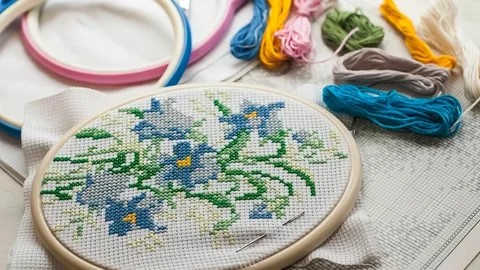
Cross Stitch Design
Cross stitch focuses on a single, primary stitch: the familiar “X”. Repeated across the fabric, it creates a clean, uniform, and almost “pixelated” look that is perfect for following counted patterns.
The Fabric: It uses Aida fabric, which has evenly spaced holes. This allows for neat, square stitches.
The Thread: It mainly uses cotton embroidery floss, which is easily found in craft stores and available in a massive rainbow of shades.
The Learning Curve: Many ask, “is cross stitch easier than needlepoint?” Generally, yes. Because it relies on reading patterns and counting spaces, it is very beginner-friendly for those who like structure.
Best Use: Cross stitch is ideal for framed wall art, bookmarks, and delicate decorative items.
What is Needlepoint? (The Durable Art)
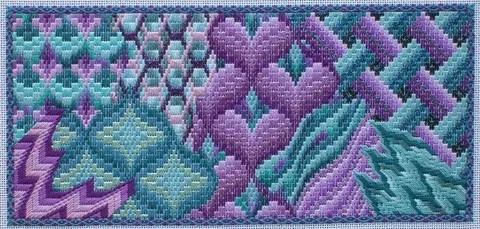
Needlepoint offers dozens of decorative stitches, such as basketweave, trellis, or diamond patterns, which are ideal for adding texture and variety. Unlike cross stitch, needlepoint usually involves “full coverage,” meaning the stitches cover every inch of the base material.
The Canvas: It is stitched on a stiff, open-weave canvas (often cotton mesh). This makes the finished product incredibly durable.
The Thread: Needlepoint allows for more creativity in materials. You can use wool, silk, cotton, and even glitter threads to give different textures.
The Design Style: While cross stitch is “counted,” needlepoint canvases are sometimes “stitch-painted,” where the design is painted directly onto the mesh for you to follow.
Best Use: Use sturdy fibers like wool for wearable or high-use items like belts, keychains, pillows, or seat covers.
What You'll Need: Needlepoint Starter Supplies
Want to try the durable, textured world of needlepoint? Here's where to start:
A stiff, open-weave canvas built to handle thicker threads like wool.
🛒 Buy on AmazonBlunt-tip needles sized for needlepoint canvas mesh.
🛒 Buy on AmazonThicker wool threads for full-coverage needlepoint texture.
🛒 Buy on AmazonWhat Is the Difference Between Cross Stitch and Needlepoint?
To understand the difference between needlepoint and counted cross stitch, we have to look at how they are built.
Cross stitch uses counted “X” stitches on even-weave fabric following a printed or digital chart. It is precise, repetitive, and ideal for geometric designs and beginners.
Needlepoint is stitched on open canvas using many decorative stitches instead of simple “X” shapes. It offers more texture and is often used for detailed patterns and home décor.
1. The Foundation: Canvas vs. Fabric
The most significant comparison of needlepoint vs. cross stitch is the base material.
Needlepoint is worked on a heavy, stiff, open-weave mesh canvas. It feels almost like plastic or starched wire.
Counted Cross Stitch uses Aida fabric, which is softer and has distinct squares with holes.
Pro Tip: Because needlepoint uses a stiffer canvas, it can handle much thicker threads like wool, whereas cross stitch is almost always done with cotton embroidery floss.
2. The Technique: “X” vs. Texture
If you’re asking “which is easier, needlepoint or cross stitch?”, the answer depends on your patience.
Cross stitch focuses on the repetitive, meditative “X” shape. It is highly structured and “pixelated.”
Needlepoint offers more variety. While the basic “tent stitch” is common, advanced needlepoint allows for dozens of decorative stitches that create incredible 3D texture.
3. Durability: Why It Matters
Is needlepoint more durable than cross stitch? Generally, yes. Because needlepoint usually involves “full coverage” (the stitches cover every single inch of the canvas), it creates a thick, rug-like fabric. This is why needlepoint is the go-to for items that take a beating, like belts, cushions, or chair covers.
Cross Stitch vs. Embroidery: Where Technology Meets Craft
While the debate is often cross stitch versus needlepoint, we cannot ignore the broader category of embroidery.
Unlike the structured grids of cross stitch, Embroidery vs Cross Stitch involves free-form stitching on any fabric. This is where most businesses transition from a hobby to a professional service.
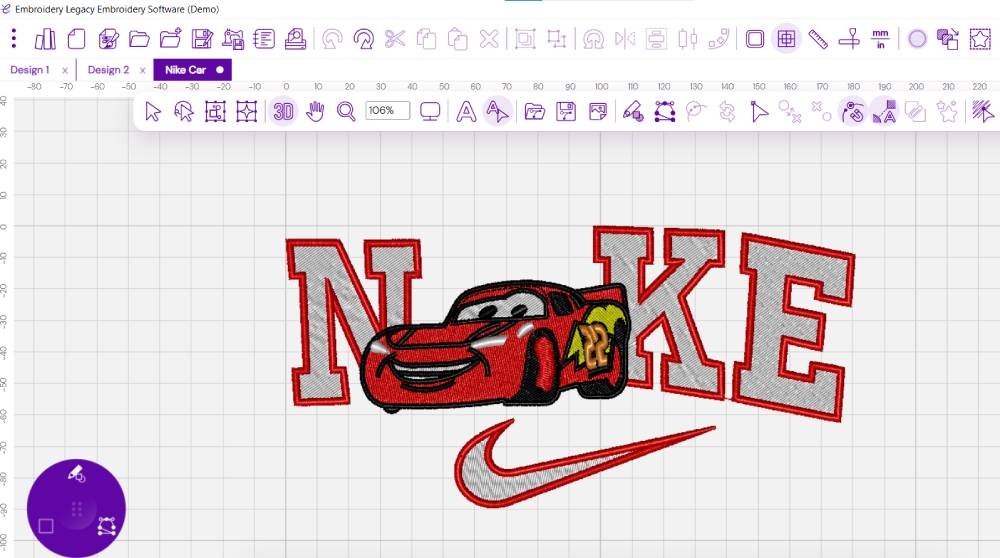
If you have a hand-stitched design that you want to replicate on 100 t-shirts, you need to bridge the gap between hand-craft and machine precision. You can even use an Online DST Viewer to audit how a hand-drawn design looks once it has been converted into a professional stitch file.
Recommended Supplies at a Glance
| Product | Best For | Link |
|---|---|---|
| 14-Count Aida Cloth | Cross Stitch | 🛒 Buy on Amazon |
| DMC Embroidery Floss Set | Cross Stitch | 🛒 Buy on Amazon |
| Mono Mesh Needlepoint Canvas | Needlepoint | 🛒 Buy on Amazon |
| Persian Wool Yarn Set | Needlepoint | 🛒 Buy on Amazon |
| Embroidery Scissors | Both | 🛒 Buy on Amazon |
| Needlework Magnifying Lamp | Both | 🛒 Buy on Amazon |
Frequently Asked Questions (FAQ)
Professional Digitizing Services
If you are looking to turn your artistic designs into production-ready files, we specialize in making that transition seamless. We help creators move from one-off hand projects to scalable, professional embroidery.
We can help with:
Custom embroidery digitizing (Hand-to-Machine conversion)
File repair and optimization
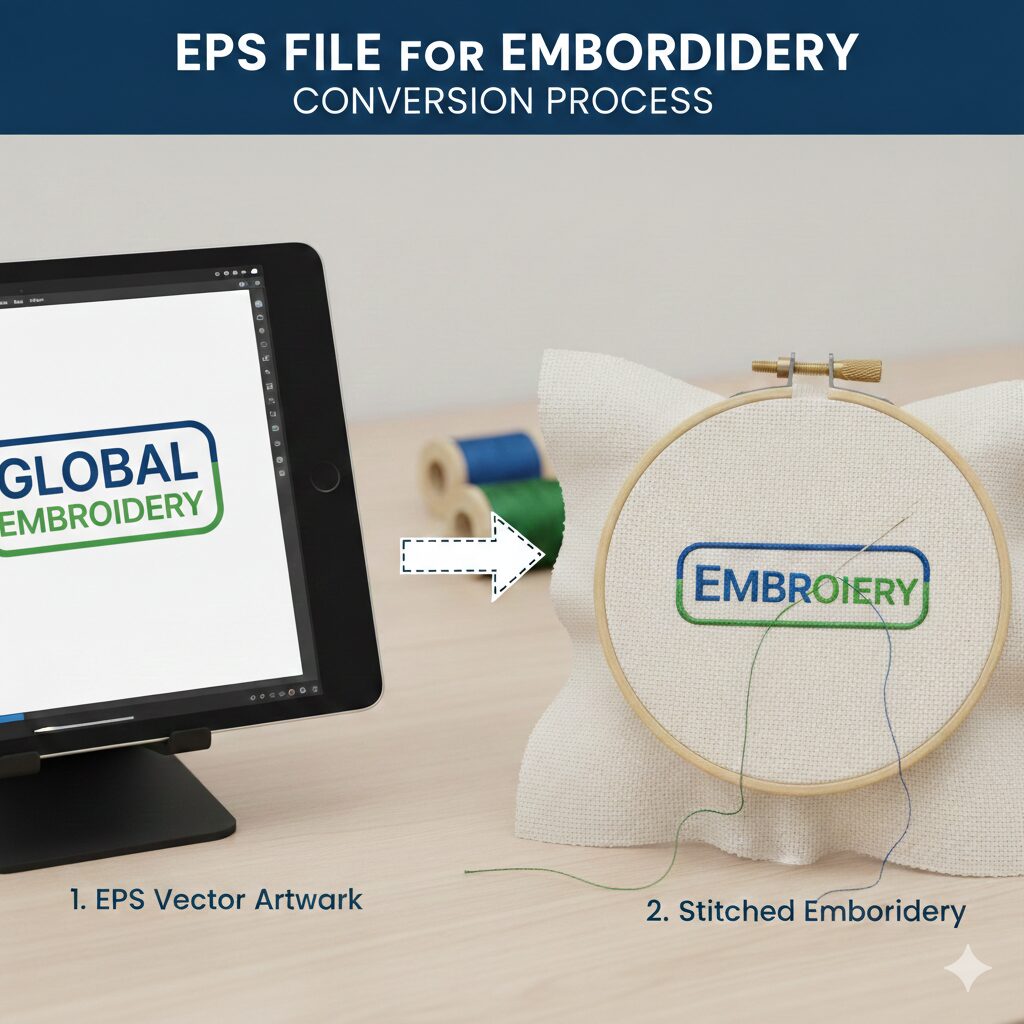
Vector artwork conversion for high-quality stitching
📧 Email: info@ezstitchdigitizing.com
📘 Facebook: EZ Stitch Digitizing
👉 Quote Form: Get a Professional Quote
Final Thoughts
Whether you choose the delicate precision of counted cross stitch or the textured durability of needlepoint, both crafts are relaxing and creative. With professional digitizing and vectorizing services, you can even transform your custom artwork into stitch-ready files that make every project shine.